Tell us about the job
Takes about a minute. No obligation.
A contractor quoting a heat pump installation in Muskegon County has to account for what the system will actually face here, and the local weather record is a quieter variable than homeowners often expect. 50 severe weather events were recorded in Muskegon County, Michigan between 2015 and 2024. At that rate, severe weather is an event in this county, not a standing condition. What drives sizing decisions and component choices is the baseline heating and cooling demand through a Michigan winter and summer, along with how well the original install was done. A system that struggles here struggled because of those pressures, and a contractor prices the job accordingly.
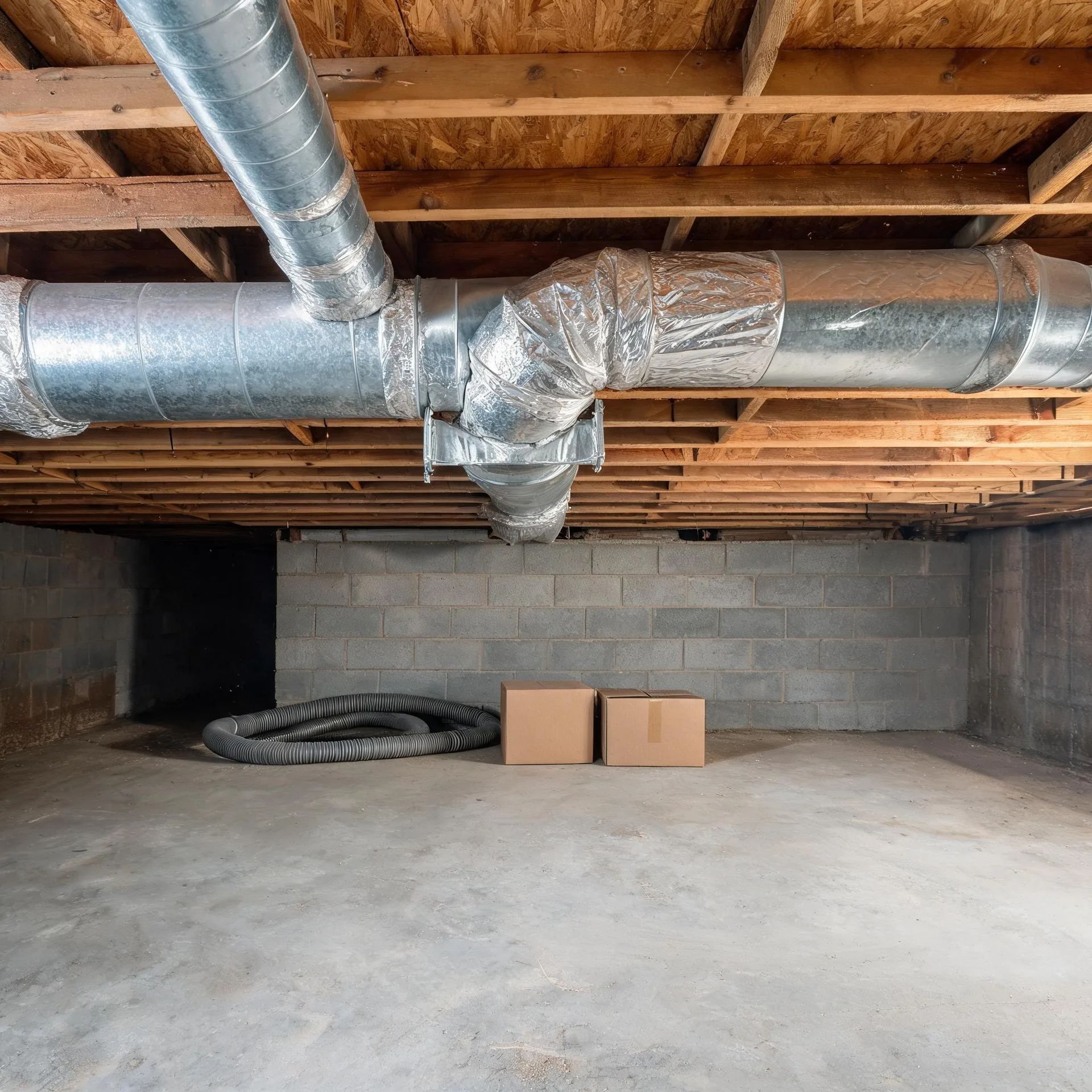
Ductwork laid out for a furnace runs at different static pressure and airflow than a heat pump needs, and in a house old enough that its original system has been swapped more than once, what is behind the walls reflects those successive adaptations rather than any single design. Half the homes in Muskegon County, Michigan were built in 1969 or earlier (2020-2024 ACS 5-year). That history matters to a heat pump installation because the duct layout a contractor inherits here was built around conditions a heat pump does not share. Before the electrical panel comes into the conversation, a contractor has to establish whether the existing trunk lines and branch runs will move the air volume a heat pump demands without overloading the blower or starving the rooms at the end of the run.
What Gets Installed With a New Heat Pump
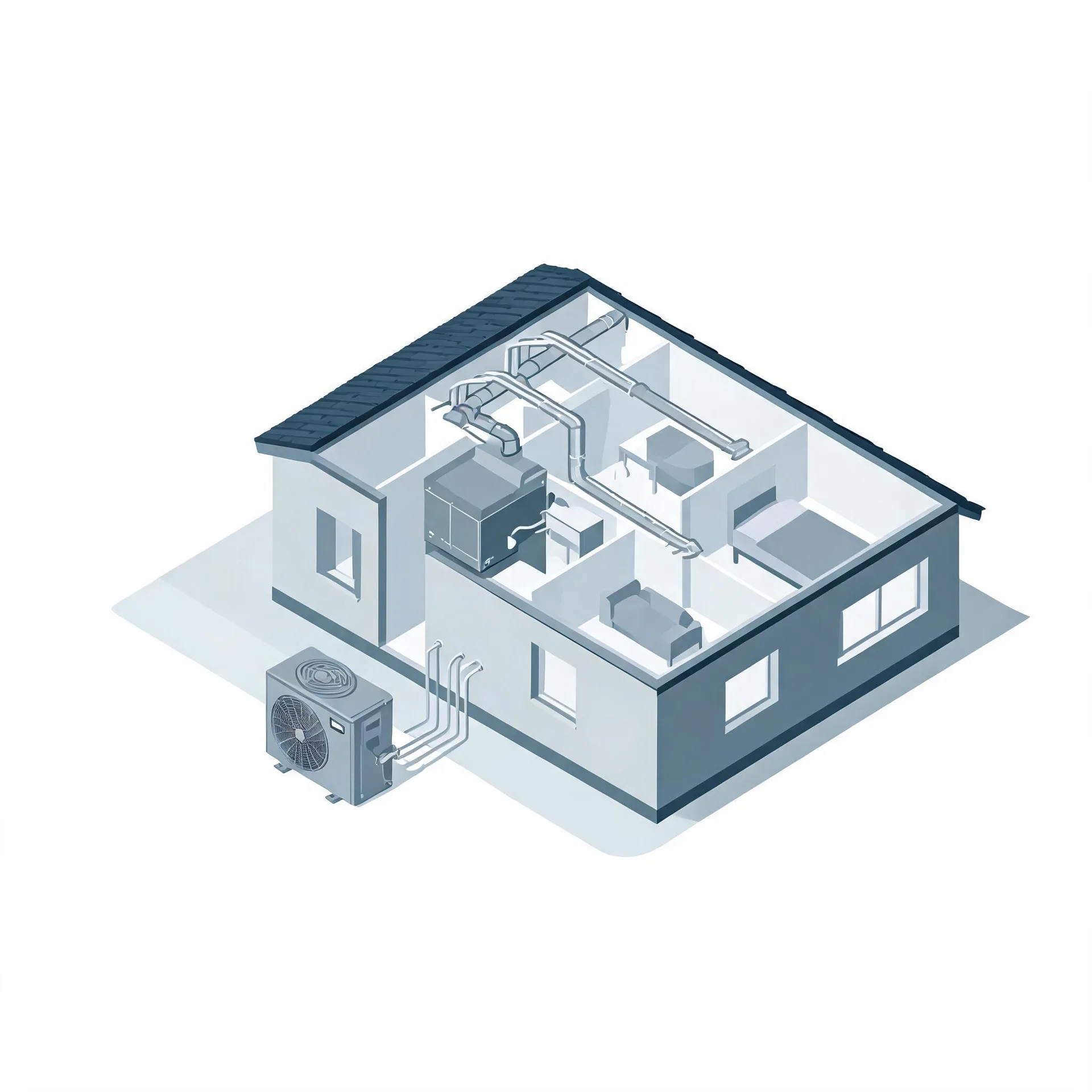
The outdoor unit is the piece most homeowners notice first. It sits on a pad or bracket outside the house and holds the compressor and the outdoor coil, which together do the heavy lifting of moving heat in or out. Inside the house, the air handler mounts in a utility space, basement, or closet and pushes conditioned air through the home.
A refrigerant line set runs between the two units, carrying the fluid that links them. The thermostat goes on an interior wall where it reads the home's temperature and tells the system when to run. A condensate drain line runs from the air handler to carry away moisture pulled from the indoor air.
The drawing shows a typical layout, and a licensed contractor determines exactly how each piece fits the specifics of your house.
Get matched in Muskegon CountyMuskegon County, by the numbers
50 severe weather events were recorded in Muskegon County, Michigan between 2015 and 2024.
NOAA National Centers for Environmental Information, Storm Events Database, bulk CSV export, events 2015-01-01 through 2024-12-31.Half the homes in Muskegon County, Michigan were built in 1969 or earlier (2020-2024 ACS 5-year).
U.S. Census Bureau, 2020-2024 American Community Survey 5-Year EstimatesMuskegon County, Michigan holds 75,266 housing units (2020-2024 ACS 5-year).
U.S. Census Bureau, 2020-2024 American Community Survey 5-Year EstimatesOwners occupy 78.1% of the occupied homes in Muskegon County, Michigan (2020-2024 ACS 5-year).
U.S. Census Bureau, 2020-2024 American Community Survey 5-Year EstimatesRules and Standards Behind Heat Pump Installation in Muskegon County, Michigan2 sourced rules and standards
Licensing and Legal Requirements in Muskegon County, Michigan
Michigan issues the mechanical contractor’s licence by classification: HVAC equipment, ductwork, refrigeration, hydronic heating and cooling, and limited or unlimited heating and refrigeration service are each a separate classification a contractor has to hold.
Michigan requires a mechanical contractor’s licence: nobody may install, alter or service the regulated mechanical work unless they, or an employee, hold a licence from the department that has not been revoked or suspended.
Severe Weather Events in Muskegon County, Year by Year
Muskegon County's climate puts real stress on heating and cooling equipment over time. How hard a heat pump works, and how long it lasts, is shaped by local conditions, which is why weather history belongs in any honest conversation about installation here.
50 severe weather events, 2015–2024. Source: NOAA National Centers for Environmental Information, Storm Events Database.