Tell us about the job
Takes about a minute. No obligation.
A heat pump repair in Washtenaw County starts with a question the weather record here makes harder to skip: how much of what failed was pushed there by the conditions this system has been running against, and how much was going to fail anyway. 166 severe weather events were recorded in Washtenaw County, Michigan between 2015 and 2024. At that rate, refrigerant-side components, contactors, and motor bearings accumulate stress over years of hard cycling through weather events rather than stable seasons. A contractor who skips that question may replace the broken part and miss the adjacent component carrying the same wear.
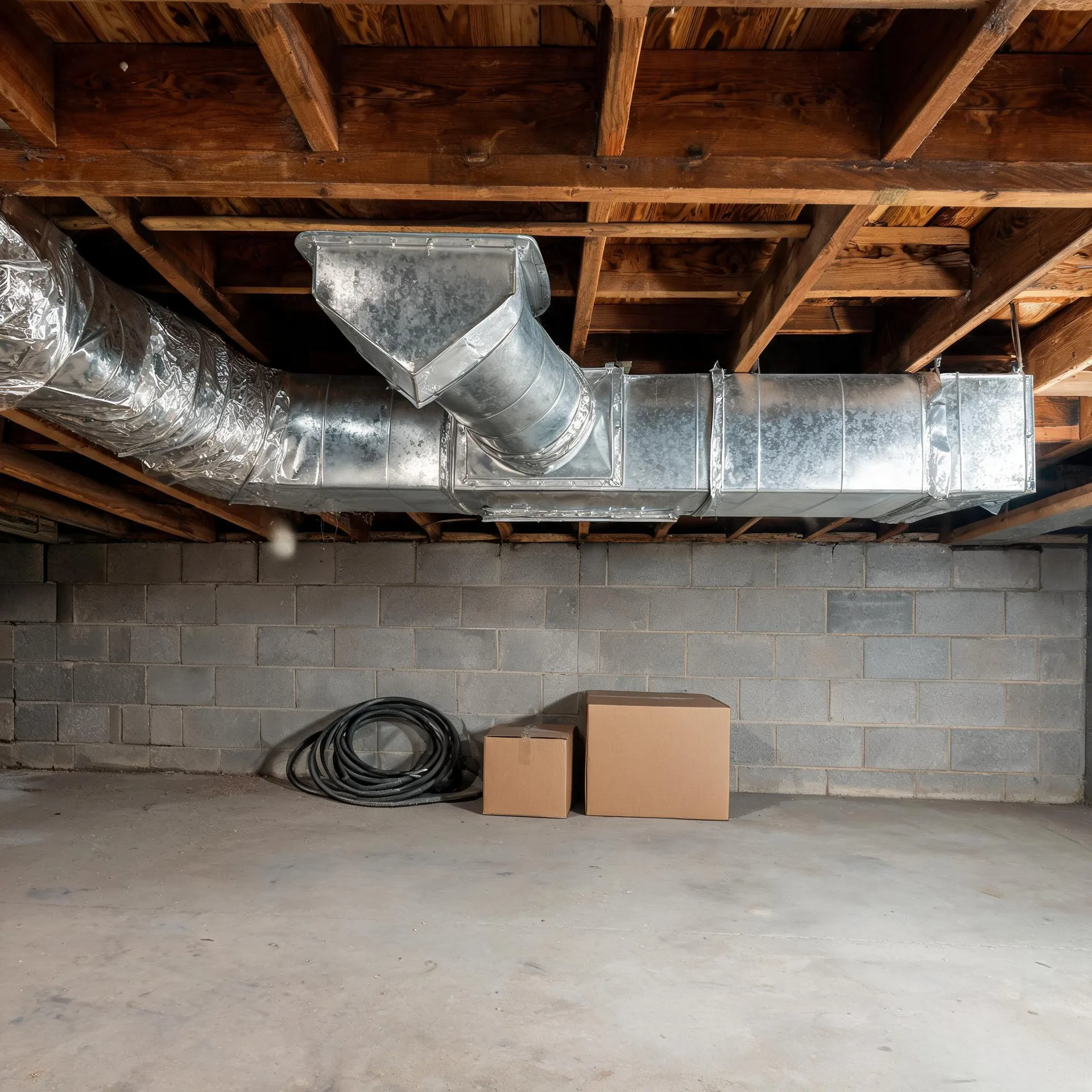
Ductwork in a house built for an earlier era of mechanical systems has usually been modified more than once, but the heat pump itself is the fresher variable, and when a repair opens it, what a contractor finds tends to be the real question. Half the homes in Washtenaw County, Michigan were built in 1978 or earlier (2020-2024 ACS 5-year). That span between the house and the equipment running in it is wide enough that the system a contractor opens may take parts that suppliers no longer stock at the counter. A repair that looks straightforward from the outside can stall on sourcing, and a contractor who checks parts availability before committing to a scope saves the homeowner from a half-finished job.
The Parts of a Heat Pump a Contractor Checks First
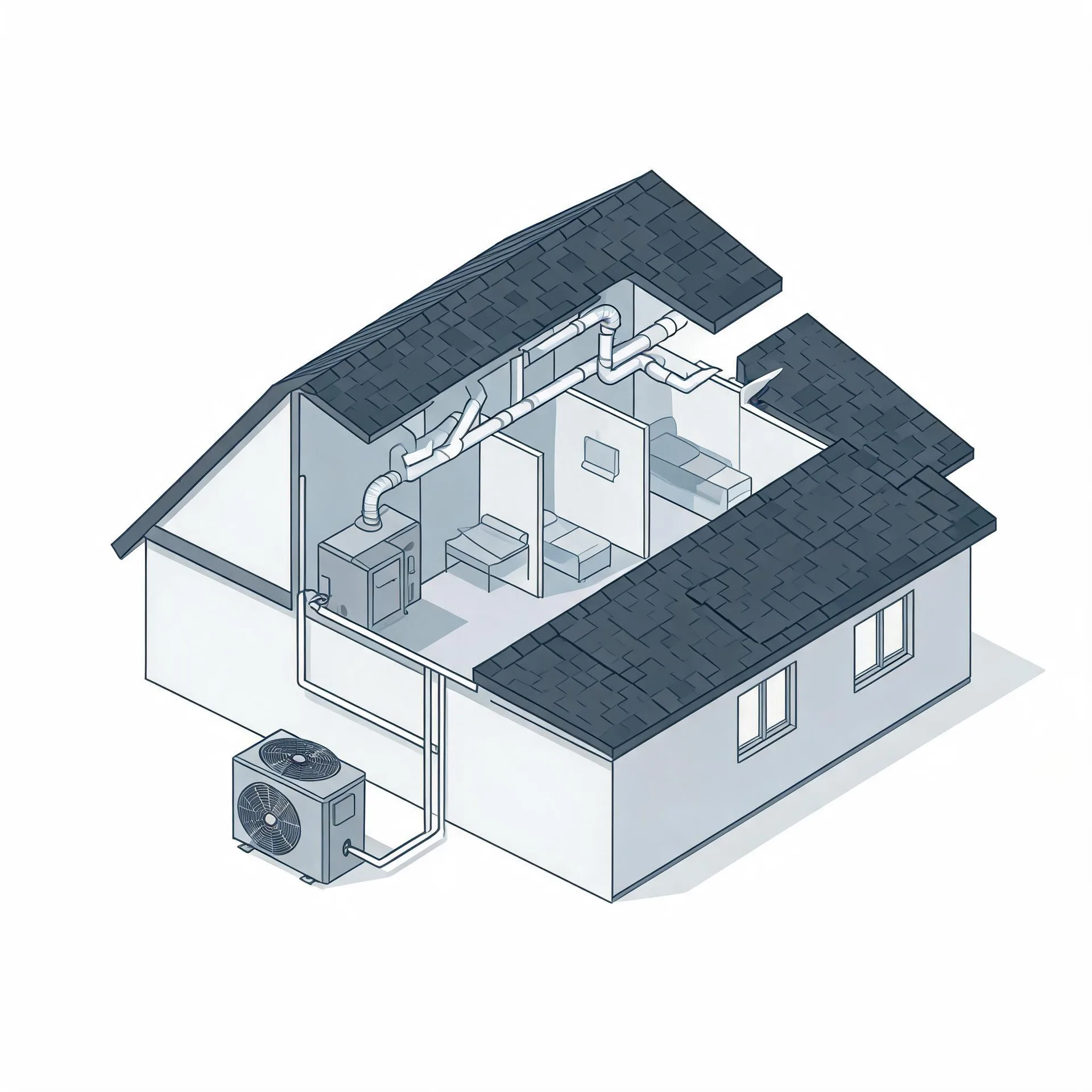
The outdoor unit sits on a pad beside the house and holds the compressor, the condenser coil, and the fan. These are the parts that take the most wear. When a heat pump stops heating or cooling, or runs but moves little air, the compressor and coil are where a contractor looks first.
Inside, the air handler holds the evaporator coil and the blower motor, and sits in a utility closet, basement, or attic depending on the house. The refrigerant lines run between the two units, and the reversing valve inside the system is what lets a heat pump switch between heating and cooling. A faulty reversing valve is a common reason a heat pump heats when it should cool, or does nothing at all.
The drawing shows a typical layout, and a licensed contractor determines which parts apply and what needs attention in your specific home.
Get matched in Washtenaw CountyWashtenaw County, by the numbers
166 severe weather events were recorded in Washtenaw County, Michigan between 2015 and 2024.
NOAA National Centers for Environmental Information, Storm Events Database, bulk CSV export, events 2015-01-01 through 2024-12-31.Half the homes in Washtenaw County, Michigan were built in 1978 or earlier (2020-2024 ACS 5-year).
U.S. Census Bureau, 2020-2024 American Community Survey 5-Year EstimatesWashtenaw County, Michigan holds 159,782 housing units (2020-2024 ACS 5-year).
U.S. Census Bureau, 2020-2024 American Community Survey 5-Year EstimatesOwners occupy 61.6% of the occupied homes in Washtenaw County, Michigan (2020-2024 ACS 5-year).
U.S. Census Bureau, 2020-2024 American Community Survey 5-Year EstimatesCodes & Standards Governing Heat Pump Repair in Washtenaw County, Michigan2 sourced rules and standards
Licensing and Legal Requirements in Washtenaw County, Michigan
Michigan issues the mechanical contractor’s licence by classification: HVAC equipment, ductwork, refrigeration, hydronic heating and cooling, and limited or unlimited heating and refrigeration service are each a separate classification a contractor has to hold.
Michigan requires a mechanical contractor’s licence: nobody may install, alter or service the regulated mechanical work unless they, or an employee, hold a licence from the department that has not been revoked or suspended.
Severe Weather Events in Washtenaw County, Year by Year
Heat pumps work harder when outdoor conditions swing wide, and repeated stress from severe weather accelerates wear on components that are already managing the gap between inside and outside. How often that kind of weather hits Washtenaw County shapes how much a local system is asked to do.
166 severe weather events, 2015–2024. Source: NOAA National Centers for Environmental Information, Storm Events Database.